
Build the Skills, Character, Confidence and Experience You Need to Thrive in College, Launch Your Career and Shape a Successful Future
Article Description
Starting college is one of the most important transitions in a young person’s life. For new students joining the Institute of Advanced Technology (IAT), this is more than the beginning of classes, because it is the beginning of an opportunity to develop knowledge, practical skills, confidence, discipline, relationships and a clearer direction for the future. This article welcomes new IAT students and provides practical guidance on how they can make their college experience enjoyable, productive and meaningful. It also encourages students to take ownership of their education and understand that the value of their college experience will depend greatly on the effort, discipline and initiative they bring to it.
Estimated Read Time
Fast reader: 12-15 minutes
Average reader: 18-22 minutes
Careful reader: 25-30 minutes
Welcome to IAT-Your Journey Begins Here
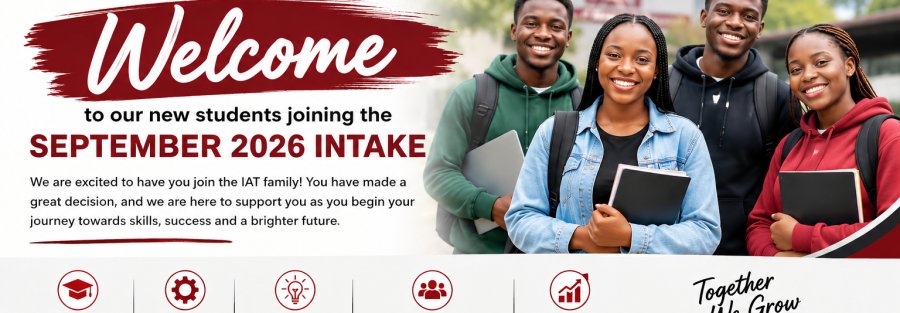
Welcome to IAT! Congratulations on beginning this exciting new chapter of your life. Whether you are joining IAT immediately after secondary school, returning to education after a break, changing your career direction or adding new professional skills to your existing qualifications, you have taken an important step. By choosing to invest in your education and personal development, you have given yourself an opportunity to become better prepared for the world of work, entrepreneurship and continued learning.
At The Institute of Advanced Technology(IAT), your journey should be about more than simply attending classes and eventually receiving a certificate. Your time in college should help you develop knowledge, practical abilities, confidence, discipline and professional habits that can continue benefiting you long after you complete your course. You should therefore approach your education as an investment in yourself rather than simply as a requirement that you must complete. You belong here, your journey has begun, and now it is up to you to make it count.
You Have Made an Important Decision
Choosing where to pursue your education is an important decision. A college is not simply a place where you go to complete a course, because it is also an environment where you develop habits, relationships, knowledge, skills and attitudes that may influence your professional life for years to come. Choosing IAT is therefore the beginning of an opportunity, but the value you eventually gain from that opportunity will depend significantly on how seriously you approach it. Your education can provide the foundation, but you must build upon that foundation through effort, practice, discipline and initiative.
The modern world of work increasingly requires people to combine knowledge with practical abilities and transferable skills. UNESCO’s work on skills development emphasizes the importance of connecting education and training with the world of work and helping young people develop abilities that support employment, entrepreneurship and lifelong development. UNESCO-Skills for Work and Life This means that your college journey should not be viewed simply as a process of collecting academic credentials. You have chosen IAT, and now you should choose to make the most of the opportunity.
College Is a New Chapter of Your Life
For many new students, college represents a major change from what they experienced in secondary school. You will have greater responsibility for your time, your academic performance, your relationships and many of the decisions you make every day. Nobody can force you to attend every class, complete every assignment, ask every question or use every opportunity available to you. The freedom that comes with college is therefore both exciting and challenging because your decisions increasingly determine the kind of student and professional you become.
You will need to learn how to make decisions without constantly waiting for someone else to remind you what needs to be done. You will also need to develop the discipline to complete important tasks even when you are tired, distracted or tempted to postpone them. These habits may appear small during your first few weeks, but they can gradually become part of your character and professional identity. College gives you an opportunity, but responsibility determines what you do with it.
Set Your Goals from Day One
One of the biggest mistakes students can make is waiting until their final semester to start thinking seriously about their future. From your first days at IAT, begin asking yourself what you want to achieve academically, professionally and personally. Your goals do not have to remain exactly the same throughout your education, because you may discover new interests, talents and opportunities as you learn. What matters is that you have a direction and regularly review whether your daily actions are taking you closer to that direction.
Start by setting academic goals for the grades, subjects and practical abilities you want to develop. Then establish career goals by thinking about the industries, occupations and professional environments that interest you. You can also establish personal goals involving discipline, communication, confidence, financial responsibility, relationships and other qualities you want to develop. Do not simply attend college; have a destination.
Take Your Classes Seriously
Your classes are the foundation of your academic journey, so treat them with the seriousness they deserve. Attend consistently, arrive on time, listen actively, take useful notes, participate in discussions and ask questions when something is unclear. Do not allow yourself to develop the habit of postponing academic responsibilities until examinations are approaching. A student who develops good academic habits early will generally find it easier to manage increasing academic responsibilities later.
Small, consistent efforts can make your academic journey much easier than last-minute preparation. Complete assignments on time and use difficult topics as opportunities to identify areas where you need additional practice. If you do not understand something, seek clarification rather than quietly allowing the knowledge gap to grow. The objective should not simply be to survive examinations, because the objective should be to become competent.
Study for Your Career, Not Just Your Exams
There is an important difference between passing an examination and becoming capable of performing a task professionally. A student may remember enough information to answer examination questions but still struggle to apply that knowledge in a real workplace. Your goal should therefore be to continuously connect classroom learning with practical situations. Whenever possible, ask yourself how the knowledge you are acquiring could be used to solve an actual problem.
Ask yourself a simple question whenever you learn something new: “If I were employed tomorrow, would I actually be able to use this knowledge?” If the answer is no, identify what additional practice, research or experience you need. Look for opportunities to practise through assignments, projects, presentations, personal projects, internships and other practical activities. This approach can help you graduate with something more valuable than examination results alone, which is the confidence that you can actually apply what you have learned.
Build Practical and Digital Skills
The modern workplace requires more than academic qualifications. Depending on your programme and career interests, you may need strong computer skills, communication abilities, research skills, problem-solving abilities, teamwork, presentation skills, customer-service skills, leadership, professional writing, entrepreneurship and digital competence. Developing these abilities alongside your formal studies can make you more adaptable when you eventually enter employment or pursue entrepreneurial opportunities.
This is particularly relevant for students at IAT because technology and professional skills are central to many areas of modern education and employment. You can explore the institution’s current range of programmes through IAT Courses and Programmes and identify areas that complement your main course. Students can also supplement their classroom learning with reputable external resources such as Microsoft Learn, which provides learning paths and technical training. The important thing is not to collect random certificates simply to increase the number on your CV, but to deliberately choose learning opportunities that strengthen abilities relevant to your career goals.
Your digital development can also include networking, programming, databases, cybersecurity, artificial intelligence, data analysis, cloud computing and other technology areas. Cisco related courses such as CCNA provides technology-focused learning resources, while IBM SkillsBuild offers learning opportunities in areas such as technology and professional skills. You can also explore Google Career Certificates where relevant to your career interests. Your certificate may open a door, but your skills help you stay in the room.
Build a Good Relationship with Your Lecturers
Your lecturers are not simply people who deliver lessons and mark assignments. They can also become valuable sources of academic guidance, professional knowledge and advice as you progress through your studies. Developing a respectful and professional relationship with your lecturers can make it easier to ask questions, seek clarification and receive guidance when you encounter academic challenges. It can also help you develop the confidence to engage professionally with people who have more experience than you.
Approach lecturers with respect and come prepared when asking for assistance. Listen to their feedback, learn from corrections and avoid interpreting constructive criticism as a personal attack. A lecturer who points out a weakness in your work is giving you an opportunity to improve that weakness before you encounter similar expectations in the workplace. A good student does not pretend to know everything, because a good student is willing to learn.
Choose Your Friends Carefully
College friendships can have a significant influence on your experience. The people you spend the most time with can affect your attitudes toward classes, assignments, money, discipline, social activities and your future ambitions. This does not mean you should avoid people who are different from you, but it does mean you should be thoughtful about the influence your closest friendships have on your decisions. Your social environment can either encourage positive habits or make it harder for you to maintain them.
Look for friends who respect your goals, encourage your progress and are willing to learn with you. Build relationships with people who can challenge you positively rather than constantly encouraging you to abandon your responsibilities. Support your friends when they are struggling, celebrate their achievements and allow them to support you when you need encouragement. Enjoy your friendships, but remember that your friends should not make you forget where you are going.
Master Your Time
College becomes much easier when you learn to manage your time effectively. Your schedule may involve classes, assignments, revision, family responsibilities, social activities, rest, personal development and other commitments. Without a plan, it is easy for one area of your life to consume all your available time. Good time management therefore requires you to understand your priorities and deliberately allocate time to the activities that matter.
Create a weekly timetable and identify your most important tasks each day. Break large assignments into smaller activities instead of waiting until the deadline is close, and keep examination dates and submission deadlines visible. Learn to distinguish between activities that are urgent and activities that are genuinely important to your long-term goals. Most importantly, learn to balance classes, study, rest, social life, family, personal development rather than allowing one area to completely overwhelm the others.
Enjoy College Life-But Do Not Lose Your Purpose
College should not be a period of constant pressure and anxiety. You should have opportunities to make friends, participate in positive activities, explore your interests, enjoy appropriate social experiences, develop hobbies and take breaks from academic work. A healthy social life can complement your education when it is balanced with your responsibilities. Taking time to rest can also help you return to your studies with greater focus and energy.
The important thing is to understand the difference between enjoying college and losing your purpose because of entertainment. Social activities should refresh you rather than permanently distract you from your goals. Learn to say no when an activity repeatedly interferes with your classes, assignments, finances or personal development. Enjoy the journey, make memories and build friendships, but remember why you came to IAT in the first place.
Protect Your Mental and Emotional Well-Being
Academic life can sometimes come with pressure. Students may experience challenges involving academic performance, finances, relationships, homesickness, uncertainty about the future, peer pressure or personal circumstances. Experiencing difficulty does not mean that you are failing as a person, and you should not feel ashamed of asking for help when you are struggling. Taking care of your well-being is an important part of becoming a responsible student.
IAT provides student-life resources that include information on student support and career development, and students should make use of appropriate support when they need it. You can explore IAT Student Life for more information. You can also learn more about mental health from the World Health Organization and seek qualified professional support when necessary. Asking for help is not weakness; it is part of taking responsibility for yourself.
Learn Financial Discipline
College may be one of the first periods when you are managing more of your own money. Learning how to budget now can prepare you for greater financial responsibilities later in life. Understand the difference between needs and wants, plan for transport and food, avoid unnecessary debt and resist pressure to spend simply because your friends are spending. Financial discipline can also help you reduce stress and make better decisions about your education and personal life.
You do not have to have a large income before you start learning financial discipline. In fact, learning to manage limited resources can teach you valuable lessons about budgeting, priorities and decision-making. Create a simple monthly budget and track where your money goes instead of relying on memory. Learn to manage the little money you have before you start managing the big money you hope to earn.
Use Technology and Social Media Wisely
Technology can either become one of your greatest educational tools or one of your biggest distractions. Use your devices to research, practise skills, communicate professionally, access learning resources and build your knowledge. At the same time, be conscious of excessive screen time, social-media distractions, online scams, cybersecurity risks and the permanent nature of much of what people post online. Developing digital discipline is therefore just as important as developing digital skills.
Your digital reputation is increasingly part of your professional reputation. Think carefully before posting content that could embarrass you or negatively affect how others perceive you in the future. Students interested in cybersecurity can also explore resources from CISA – Cybersecurity and Infrastructure Security Agency and learn about responsible digital behaviour. Use technology to build your future rather than allowing technology to consume your time.
Start Building Your CV Before Graduation
Do not wait until your final semester to begin thinking about your CV. From your first year, start keeping records of academic achievements, projects, certifications, volunteer activities, leadership experiences, internships, practical assignments, competitions and other meaningful accomplishments. A record of these experiences can make it much easier to prepare a strong CV when you eventually begin applying for opportunities. It can also help you identify gaps in your experience while you still have time to address them.
Think of every useful project as potential evidence of your abilities. If you create a website, analyze data, design a digital campaign, develop an application, produce multimedia content or complete a meaningful business project, keep evidence of your work. You can also use GitHub to showcase suitable programming and technology projects where appropriate. By graduation, you should ideally have more than a certificate, because you should have evidence of what you can do.
Develop Communication and Professional Skills
Technical knowledge becomes much more valuable when you can communicate it effectively. Learn how to write professional emails, prepare reports, give presentations, participate in meetings, listen actively and explain complicated ideas in language other people can understand. Communication skills can influence how lecturers, classmates, employers, customers and colleagues perceive your professionalism. They can also determine how effectively you explain your ideas and defend your work.
Do not assume that communication skills will automatically develop simply because you are attending college. Practise them deliberately through presentations, group assignments, discussions, professional correspondence and interactions with lecturers and fellow students. For additional career guidance, students can explore the Indeed Career Guide and learn about CVs, interviews, workplace communication and career development. Do not only become good at what you do; become good at explaining, presenting and communicating what you do.
Develop an Entrepreneurial Mindset
Not every student will become an entrepreneur, and not every student needs to start a business. However, every student can benefit from learning to identify problems, understand customers, create solutions, manage resources and recognize opportunities. An entrepreneurial mindset can help you become more creative and proactive regardless of whether you eventually work for an organization or operate your own enterprise. It can also help you appreciate the relationship between skills, value creation and income.
An entrepreneurial mindset can also help students think differently about employment. Instead of only asking, “Where can I find a job?”, learn to ask, “What problems can I solve, what value can I create and what opportunities exist around me?” You can strengthen your digital-business knowledge through resources such as HubSpot Academy, which provides training in marketing, sales and related business skills. The objective is not to pressure every student into starting a business, but to encourage students to become people who recognize opportunities and take responsible action.
Start Building Your Professional Network
Your professional network should begin developing long before graduation. Build positive relationships with lecturers, classmates, alumni, internship supervisors, professionals and other people whose work connects with your career interests. Networking is not simply about collecting phone numbers or adding hundreds of people online, because meaningful networking is based on genuine relationships. The people you meet during college may eventually become colleagues, mentors, employers, clients, collaborators or professional references.
Begin developing your professional identity while you are still a student. LinkedIn Jobs Kenya provides students and job seekers with a platform for exploring employment opportunities, building professional connections and learning about career possibilities. IAT also maintains an official LinkedIn presence that students can follow for institutional and professional updates. IAT on LinkedIn You can gradually develop your own profile by highlighting relevant education, projects, skills, certifications and experiences rather than waiting until graduation to create your professional presence.
Learn From Failure
Your college journey will not always go exactly as planned. You may receive a lower grade than expected, struggle with a particular subject, miss an opportunity, fail to secure your preferred internship or experience disappointment in a personal or professional relationship. These experiences can be frustrating, but they can also provide important lessons about preparation, resilience, communication and decision-making. Learning to respond constructively to setbacks is part of preparing for adult and professional life.
Failure does not automatically mean that your journey has ended. The more important question is “What will I learn from this?” Use setbacks to identify weaknesses, improve your methods, seek advice and develop resilience rather than allowing one disappointment to define your entire future. Every experience does not have to be successful for your overall journey to become successful.
Build Character, Integrity and Discipline
Knowledge and technical skills are important, but your character matters too. Integrity, honesty, respect, responsibility, accountability, empathy and professionalism influence how other people experience working with you. Employers and colleagues need people who can be trusted with responsibilities, information, customers, resources and relationships. Developing these qualities while you are still in college can help prepare you for professional environments where your behaviour matters as much as your technical ability.
Your reputation starts developing now, not after graduation. How you speak to people, whether you keep your word, whether you meet deadlines and how you respond to criticism all contribute to the professional identity you are building. Treat your classmates, lecturers, support staff and other people with respect even when you disagree with them. Become someone people can trust.
Make Full Use of the Opportunities at IAT
One of the most important messages for a new IAT student is this: do not be a passive student. Explore the academic, student-support and career-development opportunities available to you instead of waiting for someone else to tell you what to do. Ask questions about your programme, understand the resources available to you and seek guidance whenever you need it. Students who actively engage with their educational environment are more likely to discover opportunities that passive students may overlook.
IAT’s current website provides resources covering student life, careers, programmes and its growing library of educational articles. The IAT Career Center provides another useful starting point for students thinking about professional growth. IAT’s current blog also features articles covering areas such as cybersecurity, cloud computing, software engineering, AutoCAD, ACCA, data analytics and career development. Read the IAT Blog and News Make it a habit to explore these opportunities early rather than waiting until you are about to graduate.
Explore Skills That Match Your Career Goals
Your programme should give you a foundation, but you should also think about complementary skills that can increase your versatility. For example, students interested in data-related careers can explore data analysis, visualization, statistics and related digital tools. You can learn more through IAT Data Analysis and then identify additional resources that allow you to practise what you learn. This illustrates why students should think about the practical capabilities they want to develop rather than focusing only on the name of their qualification.
Students interested in emerging technologies can also explore areas such as artificial intelligence, data science and machine learning. IAT provides training pathways in these areas that students can explore according to their interests and career objectives. You should nevertheless remember that technology changes quickly, so continuous learning will remain important even after you graduate.
Develop Creativity and Digital Content Skills
Modern students can also benefit from learning how to communicate ideas visually and digitally. Presentation design, graphics, video, photography, social-media content and digital marketing can complement many technical and business careers. Students interested in design can explore our Graphic Design courses practise creating professional visual materials. These skills can be particularly useful for students who want to develop portfolios, freelance or support organizations with digital communication.
Creativity should not be viewed as something reserved for students studying design. An accountant may need to present financial information clearly, a data analyst may need to visualize findings, a business student may need to create marketing material and an ICT professional may need to communicate technical ideas to non-technical audiences. The ability to combine technical knowledge with effective communication can therefore make you more versatile. Learn to create, explain and present value.
Understand the Value of Qualifications
Your qualification is an important part of your professional journey, but you should also understand what it represents and how it fits into the wider education and training system. In Kenya, the Kenya National Qualifications Authority provides information relating to the Kenya National Qualifications Framework and national qualifications. Students can consult Kenya National Qualifications Authority when they need official information about qualifications and the national framework. Understanding your qualification can help you become a more informed student and make better decisions about future education.
You can also explore the Kenya National Qualifications Database for information relating to qualifications within the national framework. Students should develop the habit of verifying important information through appropriate official sources rather than relying entirely on social-media discussions or unverified claims. This is particularly important when making decisions about further education, qualifications or professional development. Being an informed student is another important part of becoming a responsible professional.
Understand and Respect College Rules
Rules should not simply be viewed as restrictions. They help create an environment where students, lecturers and other members of the institution can interact with greater order, respect, safety and professionalism. Learning to follow reasonable rules also develops habits that can be valuable in workplaces where policies, procedures, deadlines and professional standards must be respected. Your attitude toward rules can therefore contribute to your development as a responsible individual.
Learn the rules of your programme and institution and make an effort to understand why they exist. Academic integrity, punctuality, responsible behaviour and respect for others are not only college expectations, because they are qualities that can also serve you in professional life. Avoid academic dishonesty and take responsibility for your own work. Being a responsible student is part of becoming a responsible professional.
Avoid the Common Mistakes New Students Make
New students can sometimes make avoidable mistakes because they underestimate how quickly poor habits can affect their academic and personal lives. Missing classes, procrastinating, ignoring assignments, studying only before examinations, excessive social-media use, irresponsible spending and choosing friends without considering their influence can gradually create problems. The good news is that most of these problems can be prevented when students become conscious of their behaviour early. Developing good habits from the beginning is usually easier than trying to correct years of poor habits later.
Other mistakes include waiting until graduation to think about employment, failing to develop practical skills, being afraid to ask for help and assuming that a certificate alone guarantees employment. The job market can be competitive, so students should gradually build skills, experience, professional networks and evidence of their abilities. IAT itself has published guidance on common mistakes students make when applying for jobs and internships, including the importance of maintaining a professional online presence. Read IAT’s Job and Internship Application Guide Your goal should be to make mistakes that teach you something rather than repeating mistakes that could have been prevented.
Think Beyond Graduation
Take a moment to imagine yourself five years from now. Where would you like to be professionally, financially, personally and academically? The answer may change as you grow, but having a direction can help you make better decisions today. A five-year vision does not need to be a perfect prediction of your future, because it can simply provide a useful destination that you can review and adjust.
Your attendance, assignments, friendships, skills, habits, discipline, certifications, projects, experiences and professional relationships can all contribute to your future. What you do at IAT today may not determine your entire future, but it can influence the opportunities, confidence, competence and professional reputation you carry into that future. Every semester gives you another opportunity to improve your knowledge and strengthen your professional profile. Start building the future you want through the choices you make today.
The IAT Student Success Formula
A useful way to think about your journey is through a simple formula:
SUCCESS = KNOWLEDGE + SKILLS + DISCIPLINE + CHARACTER + EXPERIENCE + INITIATIVE.
Knowledge means understanding what you are studying, while skills mean knowing how to apply that knowledge. Discipline means doing what needs to be done even when you do not feel like doing it, while character means becoming someone people can trust. Experience means finding opportunities to practise what you know, while initiative means taking action instead of always waiting for someone to tell you what to do.
When these elements work together, your college experience becomes much more than a process of completing examinations. You begin developing the qualities that can help you function effectively in different professional and personal environments. You also become more capable of adapting when circumstances change or when you encounter unexpected challenges. Your success should therefore be measured not only by what you pass, but also by who you become and what you can do.
Your First 30 Days at IAT
Your first month is an excellent opportunity to establish habits that can support you throughout your studies. Instead of simply trying to survive your first few weeks, use them deliberately to understand your environment, build relationships and create a personal system for success. The habits you establish during the first month can influence how you approach the rest of your programme. Treat the first 30 days as a foundation rather than simply a period of orientation.
Week 1: Get Oriented
Understand your timetable, familiarize yourself with your learning environment, meet your lecturers and begin building relationships with your classmates. Make sure you understand the expectations associated with your programme and identify where you can seek assistance when necessary. Explore the resources available to students and make sure you know how to access important academic information. Your objective during the first week should be to become comfortable enough with your environment to focus confidently on learning.
Week 2: Establish Your Study Routine
Create a realistic study timetable and organize your academic materials. Start completing assignments early and establish a habit of reviewing your learning regularly rather than waiting until examinations. Identify the times of day when you concentrate best and use those periods for your most demanding academic work. By establishing a consistent routine early, you can reduce the pressure that often comes from last-minute preparation.
Week 3: Discover Yourself
Identify your strengths, weaknesses, career interests and areas where you need additional development. Think about the practical skills, certifications and experiences you would like to acquire before completing your studies. Consider which aspects of your course excite you most and which areas require additional effort. The purpose of this week is to begin understanding not only what you are studying, but also the professional direction you may eventually want to pursue.
Week 4: Set Your Direction
Review the first three weeks and establish academic, personal and career goals. Identify the skills you want to develop, the relationships you want to build and the opportunities you want to pursue during your time at IAT. Write down your goals and review them regularly so that they remain connected to your daily activities. This 30-day approach can transform your first month from simply “starting college” into deliberately “starting your future.”
Follow IAT, Read IAT Articles and Stay Connected
Your IAT journey should not end when you leave the classroom. One of the best ways to remain informed about courses, student activities, career opportunities, technology trends, events and educational resources is to regularly follow IAT’s official digital channels. The IAT website currently features a dedicated Blog/News section with articles covering technology, cybersecurity, cloud computing, software engineering, data analytics, student life and career development.
Make the IAT Blog part of your personal learning routine rather than treating it only as a place for institutional announcements. Recent articles include content on cybersecurity, cloud computing, software engineering, AutoCAD, ACCA, data analytics and other areas relevant to students and professionals. You can also read the student-focused article Why I Love Studying at IAT CBD Campus, which provides a student’s perspective on the learning environment and student experience. Reading regularly can help you discover new career ideas and connect your classroom learning with developments in the wider world.
Follow IAT on Social Media
Students should also follow IAT’s verified social-media channels where available so that they can keep up with institutional announcements, educational content, events, student activities and career-related information. IAT’s own student-focused content encourages students to follow the institution on platforms including Facebook, LinkedIn, Instagram, YouTube, X and TikTok. Social-media information and usernames can change, so students should always verify that an account is linked to IAT’s official website before sharing personal information or interacting with an account.
For professional networking, students can follow IAT on LinkedIn, which is an active IAT institutional page. Students can also visit the official IAT website and its Blog/News section regularly to find current institutional content and links to its digital channels. The most important thing is to use social media as a learning and professional-development resource rather than allowing it to become a distraction. Follow, read, learn and engage responsibly.
Read IAT Articles That Can Help You Grow
There is a lot to learn from the IAT Blog beyond your specific course. Students interested in technology can explore articles about cybersecurity, cloud computing, software engineering, artificial intelligence, data analytics and web development. Students interested in careers can read content about job applications, internships, CVs, employability and professional development. Students can also explore IAT’s current articles on emerging technologies and understand how different ICT disciplines connect with one another.
For example, IAT has published articles explaining why students should understand the relationship between artificial intelligence and cloud computing. Read: AI Needs Cloud and Cloud Needs You.IAT has also published material exploring technology careers inspired by global technology companies and articles explaining modern web applications. Read: How Web-Based Applications Work These resources can help you see how the subjects you study connect with real-world technology and professional opportunities.
Useful External Learning Resources
Your IAT education can be strengthened by responsibly using reputable external learning platforms. Students interested in technology can use Microsoft Learn, Cisco Networking Academy, IBM SkillsBuild and GitHub to expand their practical knowledge and explore technology projects. Students interested in business, marketing and entrepreneurship can explore HubSpot Academy and Google Digital Skills. These resources should complement your IAT studies rather than distract you from your formal programme.
Students can also explore structured online learning through Coursera and edX. These platforms can be useful for developing additional knowledge in areas such as data analysis, programming, business, project management, artificial intelligence and communication. Students should nevertheless be selective and choose learning opportunities that align with their goals rather than attempting to complete every course they encounter online. The objective should always be to build relevant competence and evidence of ability.
Useful Career and Employment Resources
Your career preparation should begin long before graduation. Students can use LinkedIn Jobs Kenya to research vacancies and understand the types of skills employers are requesting. You can also explore Fuzu Kenya, BrighterMonday Kenya and JobWeb Kenya when researching internships, entry-level opportunities and employment. These platforms should not only be used when you are ready to apply, because they can also help you identify skills that you should start developing now.
Reading job advertisements while you are still a student can be extremely useful. Look at the qualifications, technical skills, communication abilities, certifications and experience that employers repeatedly request. Then compare those requirements with your current abilities and create a personal development plan to close any gaps. Do not wait until graduation to discover what employers expect from you.
Learn About Digital Careers in Kenya
Students should also pay attention to national initiatives and organizations involved in Kenya’s digital economy. The ICT Authority Kenya provides information relating to ICT development and digital transformation in Kenya. Students interested in digital work can also explore the Ajira Digital Program and learn more about digital-work opportunities and skills development. These resources can help students understand the wider environment beyond the classroom.
You can also explore professional and industry information through organizations and resources relevant to your chosen field. Students interested in qualifications can consult the Kenya National Qualifications Authority, while students who need qualification information can explore the Kenya National Qualifications Database. Being informed can help you make better decisions about further studies, certifications and career progression. The more informed you become, the more confidently you can take ownership of your professional journey.
Protect Your Digital Identity
As you become more active online, remember that your digital identity is part of your professional identity. Students should learn basic cybersecurity principles, protect their passwords, be cautious about suspicious links and avoid unnecessarily sharing personal information online. Kenya’s Office of the Data Protection Commissioner provides information about data protection and privacy that can help students better understand the importance of protecting personal information. Developing good digital habits now can protect both your personal information and your future professional reputation.
Being digitally responsible is not only about protecting yourself from online threats. It is also about protecting your professional reputation, communicating respectfully and using digital platforms in ways that support your education and future career. Before posting something online, ask yourself whether you would be comfortable with a lecturer, employer or professional colleague seeing it several years from now. Build a digital reputation that supports the future professional you want to become.
Keep Learning Beyond the Classroom
Your IAT journey becomes more valuable when you develop the habit of lifelong learning. Read articles, watch educational videos, follow professional organizations, participate in relevant communities and explore new technologies related to your career. The world of work continues to change, particularly in technology, business and digital services, so the ability to learn and adapt will remain important throughout your career. Your ability to learn independently can become one of your most valuable professional skills.
Do not measure your learning only by the number of certificates you collect. Measure it by the problems you can solve, the tools you can use, the ideas you can communicate and the value you can create. Your IAT qualification can provide an important foundation, but continuous learning can help you remain relevant after graduation. The student who keeps learning after college gives themselves a stronger chance of remaining valuable in a changing world.
Understand the Importance of Career Readiness
Career readiness should not begin when you receive your final results. It should begin when you start developing the skills, habits, relationships and experiences that employers and clients value. This means learning how to communicate professionally, solve problems, work with others, meet deadlines, use technology responsibly and demonstrate initiative. It also means understanding how your academic learning connects with real workplace expectations.
IAT’s Career Center can provide a useful starting point for students who want to develop their professional direction. Visit the IAT Career Center You can also explore IAT’s Student Life resources for information relevant to the broader student experience. Use these resources early and consistently rather than waiting until graduation. Career readiness is something you build, not something you suddenly acquire on graduation day.
Your IAT Student Success Formula
A successful college journey requires more than intelligence. You need discipline to attend classes, skills to apply what you learn, character to act responsibly, experience to develop confidence and initiative to pursue opportunities. You also need the humility to acknowledge what you do not know and the courage to ask questions. These qualities can complement your academic knowledge and help you become a more complete professional.
Think of your journey as Knowledge + Skills + Discipline + Character + Experience + Initiative = Success.
Knowledge helps you understand, skills help you perform, discipline helps you remain consistent, character helps people trust you, experience helps you become confident and initiative helps you create opportunities. When these elements work together, your college experience becomes much more meaningful. Your goal is not simply to become a graduate; your goal is to become a capable, confident and responsible professional.
Your First 30 Days at IAT
Your first month is an excellent opportunity to establish habits that can support you throughout your studies. Instead of simply trying to survive your first few weeks, use them deliberately to understand your environment, build relationships and create a personal system for success. The habits you establish during the first month can influence how you approach the rest of your programme. Treat the first 30 days as a foundation rather than simply a period of orientation.
Week 1: Get Oriented
Understand your timetable, familiarize yourself with your learning environment, meet your lecturers and begin building relationships with your classmates. Make sure you understand the expectations associated with your programme and identify where you can seek assistance when necessary. Explore the resources available to students and make sure you know how to access important academic information. Your objective during the first week should be to become comfortable enough with your environment to focus confidently on learning.
Week 2: Establish Your Study Routine
Create a realistic study timetable and organize your academic materials. Start completing assignments early and establish a habit of reviewing your learning regularly rather than waiting until examinations. Identify the times of day when you concentrate best and use those periods for your most demanding academic work. By establishing a consistent routine early, you can reduce the pressure that often comes from last-minute preparation.
Week 3: Discover Yourself
Identify your strengths, weaknesses, career interests and areas where you need additional development. Think about the practical skills, certifications and experiences you would like to acquire before completing your studies. Consider which aspects of your course excite you most and which areas require additional effort. The purpose of this week is to begin understanding not only what you are studying, but also the professional direction you may eventually want to pursue.
Week 4: Set Your Direction
Review the first three weeks and establish academic, personal and career goals. Identify the skills you want to develop, the relationships you want to build and the opportunities you want to pursue during your time at IAT. Write down your goals and review them regularly so that they remain connected to your daily activities. This 30-day approach can transform your first month from simply “starting college” into deliberately “starting your future.”
Make Your IAT Journey Count
Your time at IAT is an opportunity to invest in yourself. Take your classes seriously, develop practical skills, ask questions, build positive relationships, manage your money responsibly and use technology wisely. Take care of your mental and emotional well-being, learn from your mistakes and develop the confidence to ask for help when you need it. Start preparing for your career before graduation rather than waiting until you have completed your final examination.
Most importantly, do not aim simply to leave IAT with a certificate. Aim to leave with knowledge, practical skills, confidence, character, experience and a clear sense of direction. Your college years provide a limited period in which you can deliberately develop yourself while benefiting from an educational environment. Make every semester count by asking yourself what you are learning, what you are practising and what you are becoming. Your future professional self will benefit from the decisions you make today.
Your Promise to Yourself
As you begin your journey, make a personal commitment to yourself. Promise yourself that you will take your education seriously, respect yourself and others, use your time wisely and seek help when you need it. Promise yourself that you will develop skills beyond the classroom, build meaningful relationships, learn from your mistakes and take advantage of opportunities. Promise yourself that when you eventually leave IAT, you will be better prepared for the future than you were when you arrived.
Welcome to IAT-Your Journey Has Begun
To every new student joining IAT, welcome. You have taken the first step toward a new chapter, and you should be proud of yourself for making the decision to invest in your education and personal development. You are now entering a period where the choices you make can influence your skills, confidence, relationships, habits and professional direction. Approach this opportunity with curiosity, discipline, humility and determination.
Now comes the most important part: what will you do with the opportunity? Attend your classes, ask questions, make good friends, develop your skills, protect your well-being, manage your money, build your network and take responsibility for your decisions. Do not wait for someone else to build your future for you, because your daily choices are an important part of that process.
IAT gives you the opportunity; you must take ownership of the journey. Your time at IAT is temporary. The person you become because of your time here can shape the rest of your life. Make it count.Welcome to IAT. Your journey to skills, success and a brighter future starts here.
Your Success Is Our Responsibility.
About the Author
Dennis Njeru is a versatile and results-driven professional with experience across finance, human resource management, ICT, operations management, general management, digital marketing and multimedia production. His multidisciplinary professional background includes financial management, accounting, data analysis, HR, administration, compliance, project coordination, customer service, IT support, networking, IT service management, CCTV systems, digital marketing, UI/UX design, graphic design, camera operations, video editing and content creation. His professional interests also include career development, employability, workplace skills, technology and professional growth.
Dennis is also experienced in resource mobilization, proposal writing, monitoring and evaluation, programme coordination and organizational performance. He is a strong advocate of continuous learning and professional development and believes that modern professionals need to combine academic knowledge with practical, adaptable and technology-enabled skills. Through his work and writing, he seeks to help students and professionals better understand the transition from education to employment. His message to students is simple: learn continuously, develop practical skills and take ownership of your professional journey.