Article Description: Discover how the Kenya-Germany TVET and Labour Mobility Conference is opening international career pathways for Kenyan professionals. Learn how industry-aligned training, global partnerships and internationally recognized certifications from the Institute of Advanced Technology (IAT) can prepare you for opportunities in Germany and beyond.
Your Skills Could Be Your Passport to a Global Career
Imagine completing your professional training in Kenya and having your qualifications recognized by employers thousands of kilometres away in Germany. A few years ago, this seemed like an ambitious dream for many Kenyan professionals. Today, it is rapidly becoming a reality.
As global labour shortages continue to affect developed economies, Germany is actively seeking qualified professionals from countries with strong technical and vocational education systems. Kenya has emerged as one of the most promising partners, thanks to its growing investment in Technical and Vocational Education and Training (TVET), labour mobility policies and skills development.
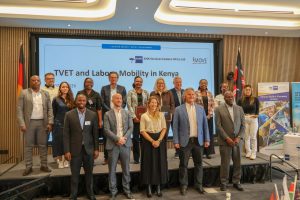
These opportunities were the focus of the AHK Eastern Africa TVET and Labour Mobility Conference, held on 7th July 2026 at the Best Western Premier in Westlands, Nairobi. The conference brought together government officials, education providers, German employers and labour mobility experts to discuss how Kenya can prepare more professionals for international employment while strengthening its own workforce.
For anyone planning their future career, this sends a powerful message: your next opportunity may not be limited by geography. With the right skills and internationally relevant training, your career can become global.
Kenya Is Becoming a Trusted Source of Skilled Talent
One of the strongest themes throughout the conference was that Kenya is increasingly being recognised as a reliable source of highly skilled professionals.Government representatives discussed the country’s commitment to improving qualification standards, strengthening labour migration systems and ensuring that Kenyan graduates possess competencies that meet international expectations. Presentations highlighted the importance of the Kenya National Qualifications Framework, labour market intermediation and structured placement support for professionals seeking employment abroad.
This is encouraging news if you are currently studying or planning to pursue professional certification.
International employers are no longer looking only for academic qualifications. They are seeking individuals who demonstrate practical competence, adaptability, digital literacy, communication skills and continuous professional development. That is precisely why choosing the right institution for your training matters.
Why TVET Is Becoming the Fastest Route to International Employment
For many years, university education was viewed as the only pathway to career success. Today, employers around the world are changing that perception. Modern industries increasingly value practical competencies that enable graduates to contribute from their first day at work. Technical and vocational education equips learners with exactly these capabilities.
Whether you are interested in information technology, engineering support, business management, finance, logistics or digital transformation, TVET programmes are designed around workplace requirements rather than purely academic theory.
The AHK conference emphasized that TVET institutions are now central to labour mobility because they produce graduates whose skills closely match employer expectations both locally and internationally.For Kenyan professionals, this represents a tremendous opportunity.
Germany’s Growing Demand for Skilled Professionals
Germany continues to experience shortages across multiple industries due to an ageing workforce, technological advancement and economic growth. During the conference, labour market experts and German organisations shared insights into the country’s ongoing demand for qualified professionals and the systems being established to connect skilled Kenyan workers with German employers. German companies and organisations also presented opportunities for collaboration with Kenyan institutions.
Although healthcare and engineering remain well-known sectors, demand is expanding into many other fields, including:
- Information Technology
- Software Development
- Data Analytics
- Cybersecurity
- Industrial Automation
- Manufacturing
- Business Administration
- Accounting
- Project Management
- Supply Chain Management
- Digital Marketing
- Human Resource Management
As businesses become increasingly digital, professionals with internationally recognised certifications enjoy an even greater competitive advantage.
The Skills Employers Want Have Changed
Technical expertise alone is no longer enough. Employers increasingly seek professionals who can solve problems, analyse information, work in multicultural teams and adapt quickly to changing technologies. Digital has affected nearly every industry.
Whether you work in finance, education, manufacturing, healthcare or government, employers now expect proficiency in digital tools, data analysis, cloud technologies and artificial intelligence. This explains why international certifications continue to gain value across the global labour market. The more your skills align with internationally recognised standards, the more competitive you become.
Why International Certifications Matter More Than Ever
Professional certifications provide independent validation of your skills.Unlike traditional academic qualifications, certifications demonstrate that your knowledge meets globally accepted industry standards.
Many multinational employers use certifications as part of their recruitment criteria because they provide confidence in an applicant’s competence.
Some of the most valuable certification areas today include:
- Artificial Intelligence
- Cybersecurity
- Cloud Computing
- Networking
- Project Management
- Business Analysis
- Accounting
- Data Analytics
- Digital Marketing
- Enterprise Resource Planning (ERP)
These credentials often improve employability, increase earning potential and create opportunities for international career progression.
How IAT Helps You Prepare for Global Opportunities
If your goal is to build a career that extends beyond Kenya, selecting the right training institution is one of the most important decisions you will make. The Institute of Advanced Technology (IAT) has spent decades preparing learners with industry-relevant skills that meet both local and international standards.
Whether you are starting your professional journey or upgrading your existing qualifications, IAT offers programmes that align with emerging global workforce demands.You can explore some of IAT’s internationally recognised programmes below:
- Artificial Intelligence Course
- Cyber Security Course
- Data Science Course
- Data Analysis Course
- Project Management Course
- Human Resource Management Course
- Digital Marketing Course
- Networking Course
- Business Analysis Course
These programmes are designed to equip you with practical, employer-focused competencies that are increasingly valued in today’s global economy.
German Industry Partnerships Are Opening New Doors for Kenyan Professionals
One of the most encouraging outcomes of the conference was the strong commitment demonstrated by German institutions and employers to work directly with Kenya in developing a globally competitive workforce. Rather than simply recruiting talent, these organisations are investing in partnerships that improve training quality, facilitate skills recognition and create structured employment pathways for qualified professionals.
This collaborative approach benefits both countries by addressing Germany’s skills shortages while creating meaningful career opportunities for Kenyan graduates.Among the organisations represented were Eggert Kleffmann & Partner GmbH, RILL Research Institute on Lifelong Learning GmbH/FiBS Afrique, Care Recruiting AG and Festo Didactic SE. Their presentations highlighted the importance of collaboration between industry and training institutions in preparing graduates who can succeed in international workplaces.
For you as a student or working professional, this means that international employers are no longer waiting until graduates arrive in Germany. They are engaging with Kenyan stakeholders much earlier to ensure that training programmes produce graduates with the competencies they require.This shift represents a major opportunity for learners who invest in internationally recognised qualifications today.
Lifelong Learning Has Become the New Career Security
One message echoed throughout the conference: learning does not stop after graduation.
Technology, automation and artificial intelligence are transforming industries at an unprecedented pace. Skills that were highly valuable five years ago may require significant updating today. Employers therefore increasingly favour professionals who demonstrate a commitment to continuous learning and professional development. This is where professional certifications become especially valuable.
Unlike traditional qualifications that may remain unchanged for years, many international certification programmes are updated regularly to reflect emerging technologies, changing regulations and evolving industry best practices.By continuously upgrading your knowledge, you position yourself not only for promotions within Kenya but also for employment opportunities across international markets.
Digital Skills Are Becoming Universal Career Requirements
Regardless of your profession, digital competence is no longer optional. Whether you work in finance, education, healthcare, manufacturing, logistics, government or entrepreneurship, employers expect you to understand modern digital tools and data-driven decision-making.
Some of the fastest-growing skills in today’s job market include cloud computing, cybersecurity, artificial intelligence, business intelligence, enterprise resource planning, project management and data analytics. These competencies improve productivity, support innovation and enable organisations to remain competitive in rapidly changing markets.
At the Institute of Advanced Technology (IAT), learners have access to industry-leading programmes designed around these emerging global demands. You can explore internationally recognised training in:
- Artificial Intelligence
- Microsoft Azure
- Cisco Networking
- Cybersecurity
- Data Analytics
- Business Intelligence (Power BI)
- Project Management
- Oracle Database Administration
- PostgreSQL
- Microsoft Dynamics 365
- ACCA
- Digital Marketing
- Human Resource Management
These programmes provide practical experience that employers increasingly expect from new recruits.
Beyond Technical Skills: Soft Skills Matter Too
While technical expertise remains essential, employers consistently emphasise the importance of professional behaviour and interpersonal skills.International organisations seek professionals who can communicate effectively, solve problems creatively and collaborate with colleagues from diverse cultural backgrounds. Adaptability, integrity, leadership and emotional intelligence are now considered critical workplace competencies.
When preparing for an international career, you should focus on developing:
- Communication skills that enable you to interact confidently with clients and colleagues from different countries.
- Critical thinking skills that allow you to analyse complex situations and make informed decisions.
- Leadership abilities that prepare you for supervisory and management responsibilities.
- Teamwork and collaboration skills that help you succeed in multicultural working environments.
- Professional ethics and accountability that build trust with employers and clients alike.
The combination of technical expertise and strong soft skills significantly improves your employability both locally and internationally.
Labour Mobility Benefits More Than Individual Professionals
International labour mobility is often viewed solely from the perspective of overseas employment, but its benefits extend much further. Professionals who gain international experience frequently return with advanced technical knowledge, new management approaches and valuable global networks. These experiences contribute to innovation, entrepreneurship and economic growth within Kenya.
Labour mobility also encourages higher training standards, stronger quality assurance systems and closer collaboration between education providers and industry. The conference discussions demonstrated that Kenya is actively strengthening these systems to ensure its workforce remains globally competitive.
For employers in Kenya, internationally trained professionals introduce new ideas, improve organisational performance and help businesses compete in regional and global markets.
How You Can Prepare for International Career Opportunities
Building a successful international career requires intentional planning. Fortunately, there are practical steps you can begin taking today.Start by identifying the industry in which you want to build your career and research the qualifications that employers value most. Choose professional certifications that are recognised internationally and complement your academic background.
Develop strong digital skills regardless of your profession, as technology now influences virtually every workplace. Improve your English communication skills and, if you are interested in Germany, consider learning basic German to enhance your competitiveness.Gain practical experience through internships, projects, volunteering or freelance work. Employers consistently value candidates who can demonstrate real-world application of their knowledge.
Finally, commit yourself to lifelong learning. The most successful professionals understand that education is an ongoing journey rather than a one-time achievement.
The Future Belongs to Professionals Who Prepare Today
The AHK Eastern Africa TVET and Labour Mobility Conference demonstrated that Kenya is entering a new era of international workforce collaboration. Government agencies, German institutions, employers and education providers are working together to create structured pathways that connect skilled Kenyan professionals with global employment opportunities.
For ambitious learners, this is a remarkable opportunity. The demand for competent professionals continues to grow, but employers are becoming increasingly selective. Those who combine recognised qualifications with practical experience, digital competence and continuous professional development will be best positioned to succeed.
The world of work is changing rapidly, and your preparation today will determine the opportunities available to you tomorrow.
Whether your goal is to secure a rewarding career in Kenya, work with multinational organisations or pursue opportunities in Germany and other international markets, investing in quality education remains one of the smartest decisions you can make.
The Institute of Advanced Technology (IAT) is committed to helping learners build globally relevant skills through internationally recognised training programmes delivered by experienced instructors in a supportive learning environment.
Visit www.iat.ac.ke to explore available courses, speak with an admissions advisor and discover how IAT can help you achieve your career ambitions.
You can also contact IAT through:
- Website: www.iat.ac.ke
- Email: registrar@iat.ac.ke
- Phone: +254 725 040 588
The global workforce is evolving, and exciting opportunities are emerging for skilled Kenyan professionals. The question is no longer whether these opportunities exist—it is whether you will be ready when they come. Invest in your future today, develop the skills employers value most and let IAT help you build a career without borders.
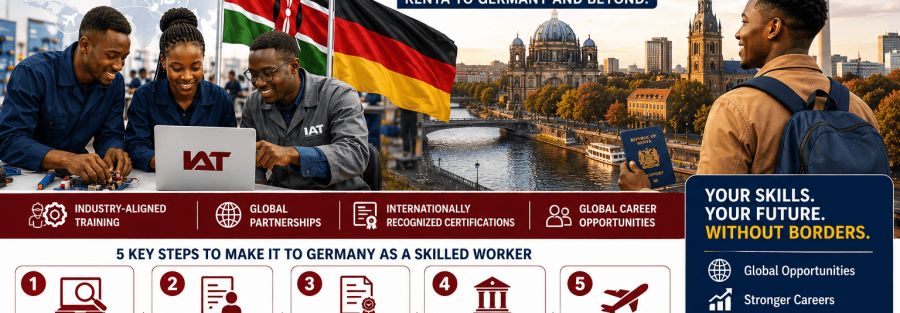
Key steps to make it to Germany as a skilled worker
Step 1: Search for Genuine Online Jobs
The first step towards working in Germany is securing a legitimate job offer from a reputable employer. Germany has a growing demand for qualified professionals in sectors such as healthcare, engineering, information technology, manufacturing, hospitality, logistics and skilled trades. To increase your chances of success, search for vacancies through official job portals and trusted recruitment platforms while avoiding employment scams that promise guaranteed jobs for a fee. Prepare a professional German-style CV, a tailored cover letter and certified copies of your academic and professional certificates before submitting your applications. One of the best places to begin your search is the Make it in Germany Job Portal (https://www.make-it-in-germany.com/en/working-in-germany), which advertises thousands of verified vacancies for international professionals. You can also explore opportunities through the Federal Employment Agency (Bundesagentur für Arbeit) (https://www.arbeitsagentur.de/int/en ), Germany’s official employment service that connects skilled workers with employers across the country.
Step 2: Apply for the Job in the Organization or Company
Once you have identified a suitable position, submit a comprehensive application directly to the employer. Your application should include a well-written CV, a personalized cover letter explaining why you are the ideal candidate, copies of your qualifications and any relevant professional references. Some employers may also require proof of German or English language proficiency depending on the role. If your application is successful, the employer will issue a formal job offer or employment contract, which forms one of the key requirements for your visa application. Some employers may even facilitate the Skilled Worker Fast-Track Procedure, designed to speed up the immigration process for international talent. More information about this process can be found on the Make it in Germany website at https://www.make-it-in-germany.com/en/looking-for-foreign-professionals/entering/the-fast-track-procedure-for-skilled-workers.
Step 3: Recognition Process in Germany
Before many foreign professionals can begin working in Germany, they must have their qualifications officially recognized. This process, known as Anerkennung (Recognition of Qualifications), evaluates whether your education and professional training meet German standards. During the recognition process, you may be required to submit your academic certificates, transcripts, professional licences, passport and certified translations of your documents. Depending on the outcome, your qualifications may receive full recognition, partial recognition requiring additional training or recommendations for further assessment. Starting this process early is highly recommended because it may take several months to complete. You can determine whether your profession requires recognition and begin the application process through the official Recognition in Germany portal at https://www.anerkennung-in-deutschland.de and obtain additional guidance from the Make it in Germany Recognition Guide available at https://www.make-it-in-germany.com/en/working-in-germany/recognition.
Step 4: Apply for the Skilled Worker Visa at the German Embassy in Kenya
After securing a valid employment contract and completing the recognition process where required, you can apply for a German Skilled Worker Visa. Applicants in Kenya should carefully review the visa requirements, prepare all supporting documents and book a visa appointment through the official channels provided by the German Embassy. Required documents typically include a valid passport, employment contract, proof of qualification recognition where applicable, health insurance, financial documentation and completed visa application forms. The German Embassy in Kenya is located at Ludwig Krapf House, Riverside Drive 113, P.O. Box 30180-00100, Nairobi, Kenya. Up-to-date visa requirements, appointment procedures and downloadable application forms are available on the official German Embassy Nairobi website at https://nairobi.diplo.de/ke-en/service/visa-entry.
Step 5: Book Your Flight and Travel to Germany to Begin the Integration Process
Once your visa has been approved, you can confidently book your flight and prepare for your relocation to Germany. Before travelling, ensure you have your passport, visa, employment contract, accommodation arrangements, health insurance documents and original academic certificates. After arriving in Germany, you will begin the integration process, which includes registering your residential address with the local authorities, obtaining your tax identification number, opening a German bank account, enrolling in health insurance and, where necessary, attending language and integration courses. Completing these steps will enable you to settle quickly into your new workplace and community while enjoying the many professional and personal opportunities Germany offers. Comprehensive information about settling in Germany as a skilled worker is available on the Make it in Germany portal at https://www.make-it-in-germany.com/en and the Federal Employment Agency website at https://www.arbeitsagentur.de/int/en.
About the Author
Dennis Njeru is a content writer and digital marketing professional with expertise in education, technology and career development. He writes about TVET, labour mobility and professional certification for learners and professionals across East Africa.